

瓦の意匠を、現代の掌(て)へ。
Tile Aesthetics, Within Your Reach.
【新商品】ふくろう・鬼面の瓦コースターが登場。職人が一枚ずつ手がけた、
本物の瓦の質感を活かしました。
-
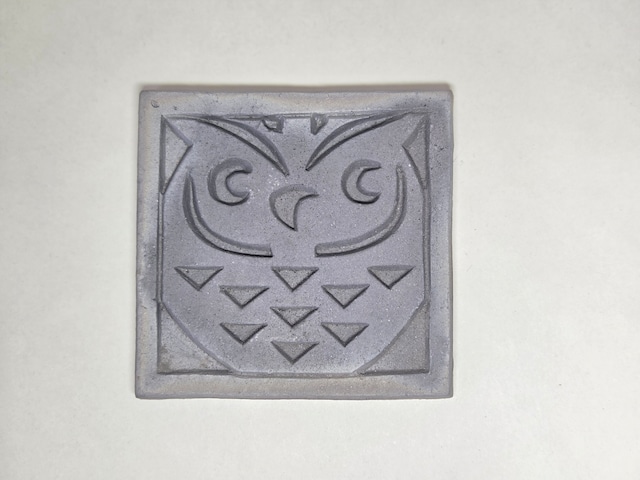
触れる意匠|瓦コースター梟 (ふくろう)
¥1,560
瓦コースター(ふくろう文様) 瓦の素材に、ふくろうの意匠いれたコースターです。 実際の屋根瓦と同じ素材を使い、 ふくろうの輪郭や羽の文様を、すっきりとした四角いコースターの中に表現しました。 凹凸のある彫りが、光の当たり方によってやわらかな陰影を生み出します。 瓦ならではの落ち着いた質感は、 湯のみやマグカップ、グラスとも相性がよく、 食卓やデスクまわりに自然になじみます。 コースターとしてはもちろん、 小物置きや飾り台として使うのもおすすめです。 ふくろうは「福来郎」「不苦労」とも書かれ、 古くから縁起の良いモチーフとして親しまれてきました。 日常の中で、さりげなく楽しめる瓦の一枚です。 商品仕様 素材:瓦(実際の屋根瓦と同素材) 形状:正方形 一辺約9.5cm 用途:コースター/小物置き/インテリア ※当製品は焼き物です。一つ一つ風合いが異なります写真と異なる部分がある場合がございます。ご了承ください。 ※価格は予告なく変更される場合がございます。あらかじめご了承ください。 Edo Kawara Coaster — Owl / 瓦コースター 梟 An owl, quietly pressed into kawara. This coaster is made from the exact same clay and kiln process as real Japanese roof tiles — shaped by hand, fired in a traditional kiln, and left unglazed so the natural texture of the material comes through entirely. The owl motif is carved in clean relief within a square form. Depending on the angle of light, the carved lines cast soft shadows that shift throughout the day. No two pieces are identical — the subtle variations in tone and surface are the signature of authentic kawara, not a flaw. In Japan, the owl has long been considered a bird of good fortune. Written as 福来郎 (fuku-rō, "one who brings happiness") or 不苦労 (fu-kurō, "free from hardship"), it has been cherished as an auspicious motif for centuries. Use it as a coaster for your cup or glass. Place it as a small display piece on a desk or shelf. Either way, it brings a quiet presence to wherever it sits. Specifications Material: Kawara (same as authentic roof tile) Shape: Square / approx. 9.5cm per side Use: Coaster / small tray / interior accent As with all fired ceramics, each piece carries its own unique character. Minor variations from the photographs are part of what makes it yours.
MORE -
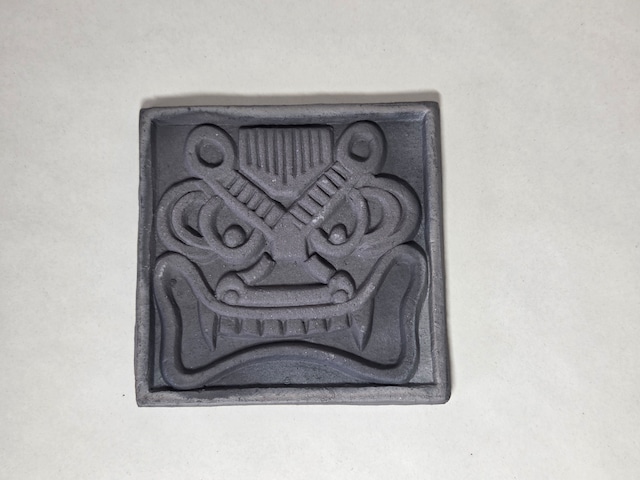
触る意匠|瓦コースター鬼面 (きめん)
¥1,560
瓦コースター(鬼面) 瓦の表情を、そのまま一枚に。 鬼瓦の意匠を正方形に落とし込んだ、瓦素材のコースターです。 実際の屋根瓦と同じ素材を使用し、凹凸のある表情や輪郭の線まで、くっきりと浮かび上がります。 釉薬を使わない瓦ならではのマットな質感は、 カップやグラスを置いたときにも手元になじみ、静かな存在感を添えてくれます。 コースターとして使うのはもちろん、 小さな飾り台や、デスク周りのアクセントとしてもおすすめです。 日常の中に、少しだけ和の意匠と素材の重みを。 使うたびに、瓦の持つ表情を楽しめる一枚です。 商品仕様 素材:瓦(実際の屋根瓦と同素材) 形状:正方形 一辺約9.5cm 用途:コースター/小物置き/インテリア ※当製品は焼き物です。一つ一つ風合いが異なります写真と異なる部分がある場合がございます。あらかじめご了承ください。 ※価格は予告なく変更される場合がございます。あらかじめご了承ください。 Edo Kawara Coaster — Demon Face / 瓦コースター 鬼面 The expression of kawara, held in the palm of your hand. The kimen — the fierce, expressive face found on the ridges and eaves of Japanese temples and traditional architecture — has been reimagined here as a square coaster. Crafted from the same clay and kiln process as real roof tiles, the bold lines of the brow, the forceful set of the mouth, and the surrounding detail all rise in sharp relief from the unglazed surface. The matte texture of kawara is not just visual. Place a cup on it and you will notice: the slight roughness naturally prevents condensation from spreading, keeping your table dry without a word. A coaster that works quietly. A piece of Japanese craft that speaks clearly. Specifications Material: Kawara (same as authentic roof tile) Shape: Square / approx. 9.5cm per side Use: Coaster / small tray / interior accent Each piece is unique. The natural variations in tone and surface texture are the result of kiln firing — an inherent quality of authentic kawara.
MORE -
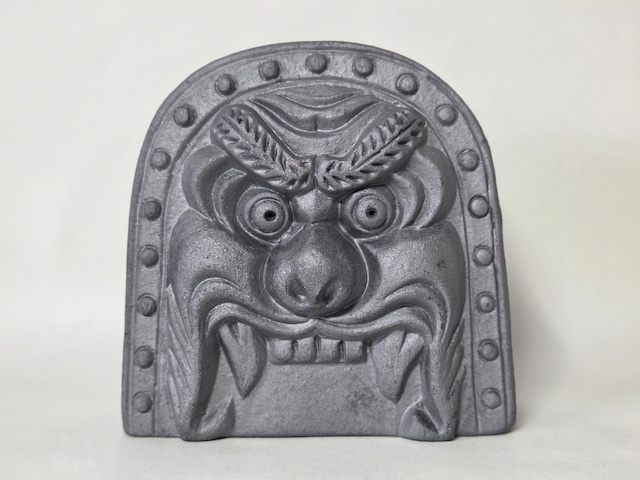
触れる意匠|鬼瓦文鎮(ペーパーウェイト)
¥2,260
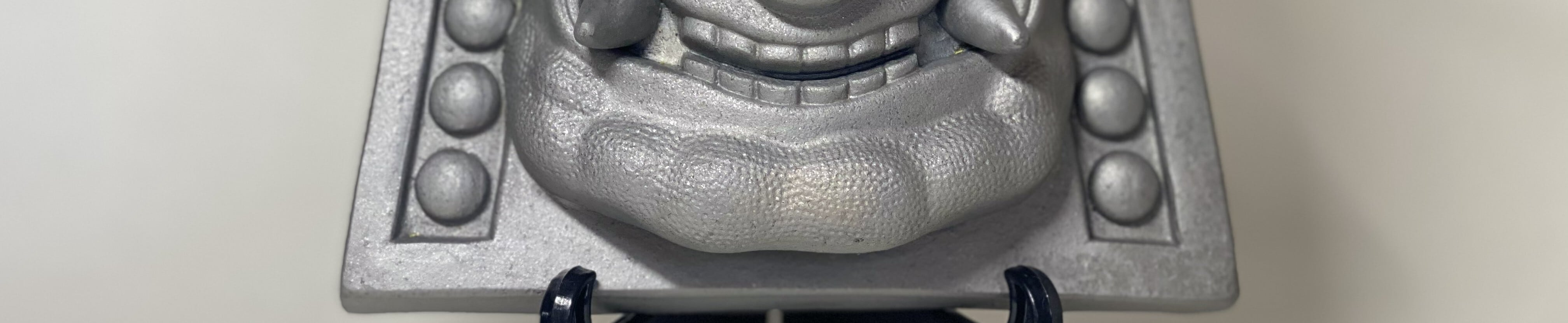
鬼瓦文鎮(ペーパーウェイト) 机の上で、しっかりとした存在感。 鬼瓦をモチーフにした文鎮です。 本物の屋根瓦と同じ素材を使い、鬼瓦の表情をそのまま小ぶりなサイズに落とし込みました。 眉の立体感、口元の力強さ、縁を囲む数珠掛けのディテールまで、瓦らしい陰影がしっかりと表れています。 重さは約600g、高さは約10cm。 紙をしっかり押さえる実用性はもちろん、机の上に置くだけで空気が少し引き締まるような感覚があります。 無機質になりがちなデスクに、 和のモチーフと素材の重みを、さりげなく。 「飾るため」でも「使うため」でも、どちらでも成立する。 鬼瓦ならではの迫力を、日常の中で楽しめる一品です。 商品仕様 素材:瓦(実際の屋根瓦と同素材) 重量:約600g 高さ:約10cm 用途:文鎮・ペーパーウェイト・インテリア小物 ※当製品は焼き物です。一つ一つ風合いが異なります写真と異なる部分がある場合がございます。あらかじめご了承ください。 ※価格は予告なく変更される場合がございます。あらかじめご了承ください。 Edo Kawara Paperweight — Demon Tile / 鬼瓦文鎮 Something shifts when this sits on a desk. The onigawara — the guardian demon face of traditional Japanese roof tiles — has been scaled down from rooftop to tabletop, without losing a trace of its presence. Crafted in Ogawa-machi, Saitama, from the exact same clay and kiln process used for real roof tiles, this paperweight carries the weight, texture, and expression of the original. The raised brow. The set of the jaw. The rosary-bead border that frames the face. Every detail that would be carved into a full-scale onigawara is here, rendered in unglazed kawara with the quiet authority of the real thing. At approximately 600g, it holds paper with ease — but its purpose goes beyond function. On an otherwise unremarkable desk, it is the one thing that makes you pause. Specifications Material: Kawara (same as authentic roof tile) Weight: approx. 600g Height: approx. 10cm Use: Paperweight / decorative object As with all fired ceramics, each piece is unique. Minor variations in surface tone and texture are a natural quality of hand-crafted kawara.
MORE -

伝承する意匠|鴟尾 薬師寺新金堂 (しび やくしじしんこんどう)
¥56,000
鴟尾(しび)とは、寺院建築の棟の両端に据えられる、日本最古の装飾瓦のひとつです。 火災や厄災を封じ、建物を守るという願いを込めて、飛鳥時代から受け継がれてきた意匠。 屋根の頂に凛と立つその姿は、日本建築の中でも特別な格を持ちます。 本品は、奈良・薬師寺新金堂の棟を飾る鴟尾を、埼玉県小川町の鬼師が、実際の屋根瓦と同じ粘土・同じ焼成工程で忠実に再現したものです。 釉薬を用いないマットな素地、焼きによって生まれる微妙な色ムラや陰影——量産品では出すことのできない、本物の瓦だけが持つ表情がここにあります。 手に取れば、その重厚に驚くはずです。 これは単なる置物ではなく、千年以上をかけて磨かれてきた技の結晶です。 桐箱入り。脚付き(プラスチック製)。 サイズ:高さ210mm × 幅180mm × 奥行95mm ※焼き物のため、一点ごとに風合いが異なります。写真と細部が異なる場合がございますが、それもこの素材の個性とお考えください。 Shibi — the ornamental roof tiles that have crowned the ridges of Japanese temples since the Asuka period. Placed at both ends of a rooftop, they were believed to ward off fire and misfortune, standing as silent guardians of sacred architecture for over a thousand years. This piece faithfully recreates the shibi of Yakushi-ji Temple's New Golden Hall in Nara — crafted by a master onishi (demon tile sculptor) in Ogawa-machi, Saitama, using the exact same clay and kiln process as real roof tiles. No glaze. No shortcuts. The subtle variations in tone and the quiet matte surface are not imperfections — they are the signature of authentic kawara. Pick it up, and the weight alone will tell you what this is. Presented in a traditional paulownia wood box. Includes display stand. Dimensions: H210mm × W180mm × D95mm As with all fired ceramics, each piece carries its own unique character. Minor variations from the photographs are part of what makes it yours.
MORE -

伝承する意匠|鴟尾 唐招提寺 (しび とうしょうだいじ)
¥56,000
鴟尾(しび)は、寺院の棟に据えられる、日本建築の中でも最も格の高い装飾瓦のひとつ。 火除けと魔除けの願いを込め、飛鳥時代から屋根の頂に立ち続けてきた意匠です。 本品は、奈良・唐招提寺の棟を飾る鴟尾を、埼玉県小川町の鬼師が、実際の屋根瓦と同じ粘土・同じ焼成工程で忠実に再現したものです。 唐招提寺の鴟尾は、薬師寺のものと比べてやや小ぶりで端正な造形が特徴。 その静謐な佇まいは、飾る空間に凛とした緊張感をもたらします。 釉薬を使わない素地の質感、窯が生み出す陰影—— この表情は、大量生産では決して再現できないものです。 桐箱入り。脚付き(プラスチック製)。 サイズ:高さ190mm × 幅160mm × 奥行85mm ※焼き物のため、一点ごとに風合いが異なります。写真と細部が異なる場合がございますが、それもこの素材の個性とお考えください。 Shibi — the guardian ornaments of Japanese temple rooftops, standing at the ridge-ends since the Asuka period to ward off fire and misfortune. This piece recreates the shibi of Tōshōdai-ji Temple in Nara — one of Japan's most revered UNESCO World Heritage sites. Compared to its Yakushi-ji counterpart, this shibi carries a slightly more compact and composed form, with a quiet dignity that defines the architectural spirit of Tōshōdai-ji. Crafted by a master onishi (demon tile sculptor) in Ogawa-machi, Saitama, using authentic kawara clay and kiln techniques — the same process used for real roof tiles. The unglazed surface, the natural tonal variations from the firing, the weight in your hands: none of this can be replicated by machine. Presented in a traditional paulownia wood box. Includes display stand. Dimensions: H190mm × W160mm × D85mm Each piece is unique. Minor variations in tone and texture are the natural result of hand-craftsmanship and kiln firing.
MORE -

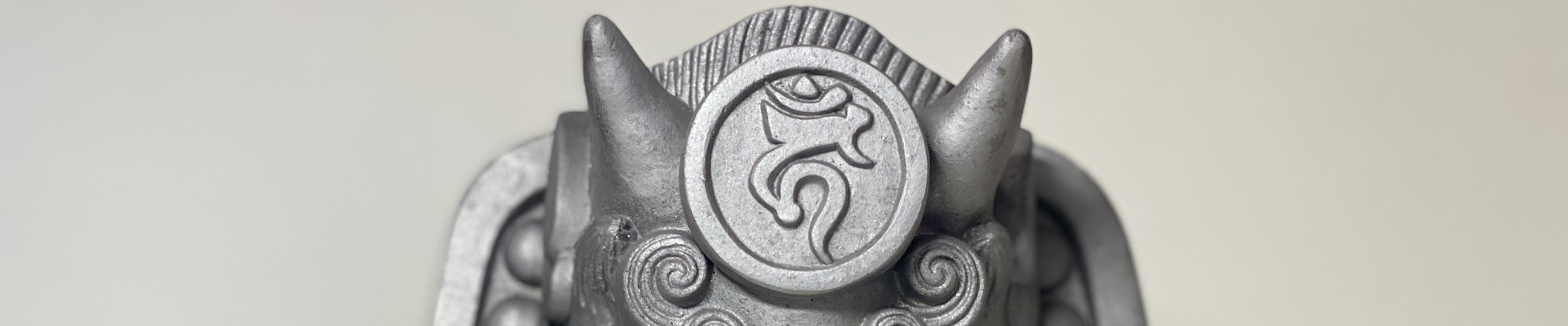
伝承する意匠|干支梵字入り数珠掛け鬼面 (えとぼんじいりじゅずかけきめ)
¥50,000
鬼面(きめん)は、古くから建物に宿る邪気を祓うとされてきた、瓦の中でも特別な意匠です。 その顔を囲む数珠掛けの文様は、仏教の結界を象徴し、空間を清める力を持つとされてきました。 本品はさらに、鬼面の上部に梵字で干支を刻んだ、江戸瓦堂ならではの一品です。 梵字の干支は、辰巳・卯・丑寅・子・戌亥・酉・未申・午の8区分。 ご自身の干支をお選びいただくことで、守り本尊との縁を結ぶ意味合いも持ちます。 埼玉県小川町の鬼師が、実際の屋根瓦と同じ粘土・同じ焼成工程で丁寧に仕上げた一点です。 眉の立体感、口元の力強さ、数珠掛けのディテールまで、瓦ならではの陰影がくっきりと刻まれています。 デスクや床の間、玄関など——置く場所の空気が、少し変わります。 桐箱入り。脚付き(プラスチック製)。 サイズ:高さ145mm × 幅140mm × 奥行75mm ※梵字の干支区分により、お選びいただける種類が異なります。ご注文の際はご希望の干支をお知らせください。 ※焼き物のため、一点ごとに風合いが異なります。 The kimen — the fierce guardian face of Japanese roof tile tradition — has stood watch over buildings for centuries, believed to drive away misfortune and purify the spaces it protects. Surrounding the face, the juzukake (rosary bead) pattern forms a sacred boundary, drawn from Buddhist symbolism. This piece adds a further layer of meaning: a Sanskrit character representing your zodiac sign (eto), carved above the face. In Japanese Buddhist tradition, each zodiac sign corresponds to a guardian deity — making this not merely a decorative object, but a personal talisman. Crafted by a master onishi (demon tile sculptor) in Ogawa-machi, Saitama, using authentic kawara clay and kiln techniques. The bold relief of the brow, the strength of the expression, the intricate detail of the rosary border — all rendered in the quiet, unglazed surface that only true kawara possesses. Place it on a desk, in an alcove, by an entrance. The room shifts. Presented in a traditional paulownia wood box. Includes display stand. Dimensions: H145mm × W140mm × D75mm Please specify your desired zodiac sign at the time of order. Sanskrit zodiac groupings: Tatsu-Mi / U / Ushi-Tora / Ne / Inu-I / Tori / Hitsuji-Saru / Uma. Each piece is unique due to hand-craftsmanship and kiln firing.
MORE